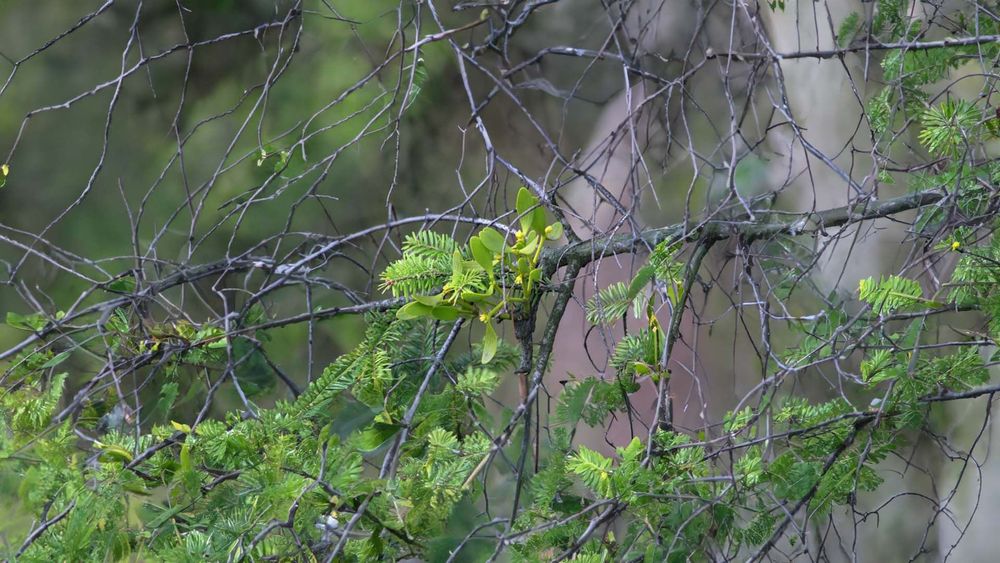
For centuries, Polish foresters have struggled with the forces of nature, protecting forests from threats that constantly evolve. Today, a quiet, green intruder driven by climate change has come to the forefront: common mistletoe. This plant, well known from Christmas decorations and symbolizing happiness, love, peace, and rebirth, appears at first glance to innocently adorn the crowns of pines and firs. In reality, however, it is becoming a genuine threat to the stability and future of our forest stands. This is why we return to this issue once again.
Common mistletoe—or more precisely, its two subspecies occurring on coniferous trees: pine mistletoe, frequently found on Scots pine, and fir mistletoe, occurring on fir—are hemiparasites of forest trees. They primarily colonize the upper parts of tree crowns. By penetrating branch wood with the help of haustoria, they extract water and mineral salts, competing directly with the host tree’s tissues, while their assimilation apparatus competes for light. Under conditions of water shortage or soil drought, this competition for resources leads to deterioration of the tree’s physiological condition and, in extreme cases, to its death.
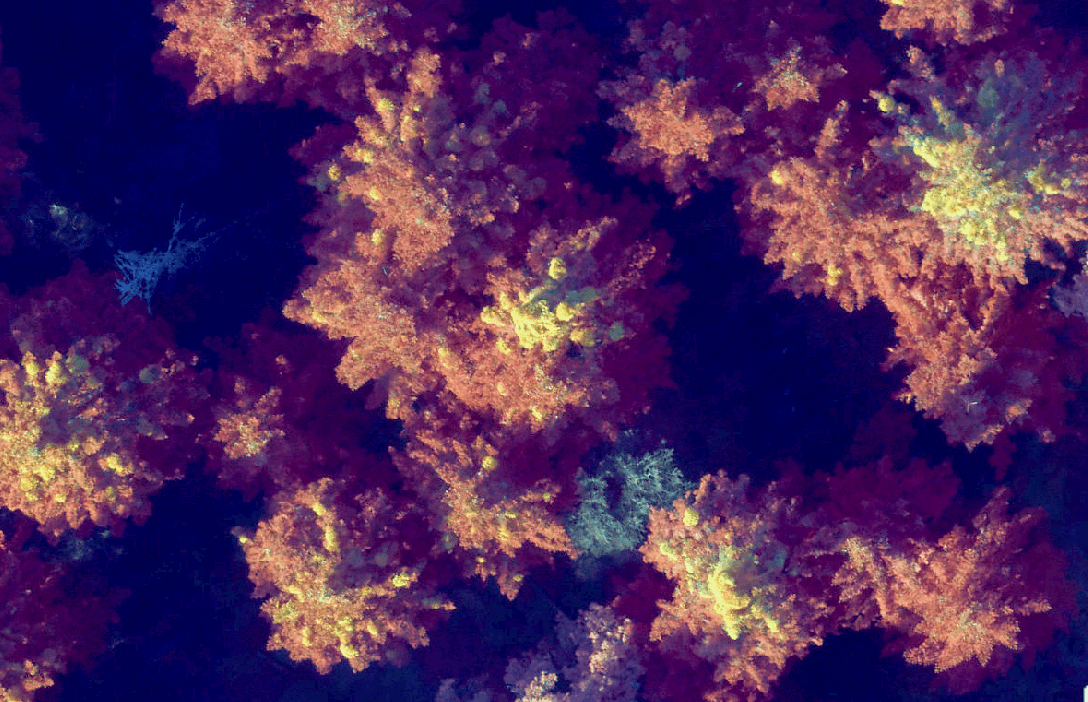
This problem provokes heated debate among foresters and conservationists, while questions concerning the actual impact of this phenomenon on forest condition remain unanswered. Are we dealing with a natural process or a catastrophe requiring immediate intervention? Practicing foresters need solid data to convince both political decision-makers and the public of the necessity of taking action.
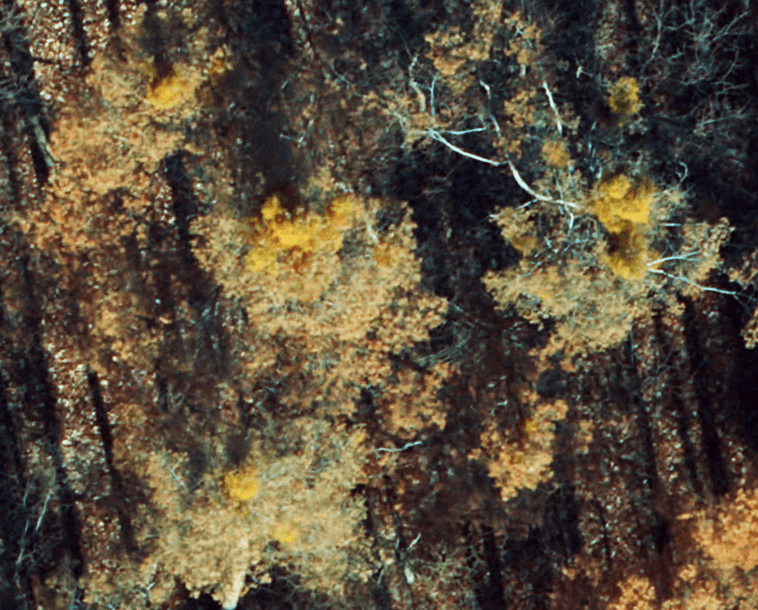
In this article, we move away from subjective opinions and emotions. We present the results of pioneering remote-sensing research that provides concrete facts and evidence. Our aim is to reliably estimate the scale of the threat using the latest technologies, in order to support foresters in making rational, data-driven decisions regarding the future of Polish forests.
What, then, are the facts regarding the impact of mistletoe on forest stands? And how should this threat be addressed?
Clearly warmer summers and winters over the past two decades—often associated with global warming—have resulted in a noticeable increase in the occurrence of common mistletoe on pine and fir. This phenomenon particularly affects older age-class stands.
Although mistletoe shrubs are relatively easy to observe from the ground, the consequences of mass infestation and its impact on stand condition are difficult to quantify. It is a fact that the oldest photographs from the early 20th century already show numerous mistletoe infestations on fir, for example in the spa town of Rymanów-Zdrój. Thus, the problem existed earlier as well. However, the dynamics of this phenomenon and the actual impact of the hemiparasite on forest management remain unknown.
Determining the scale of mistletoe’s impact on forest stands is a major challenge for forestry. There is no simple correlation between the amount of mistletoe biomass on a tree and the tree’s condition, defined for example by the degree of defoliation. Moreover, determining these parameters at the scale of entire forest districts is technically difficult, time-consuming, and costly.
In 2025, SmallGIS Ltd. from Krosno conducted an analysis of the extent and parameters of mistletoe burden on forest stands using remote-sensing techniques. The company provides professional aviation services, particularly for forestry and advanced geoinformation solutions.
The main objectives of the study were to determine:
In total, scattered forest compartments covering more than 20,000 hectares were selected for inventory. It should be noted that nearly the entire area of four forest superintendencies was imaged, while the analyzed area included only stands dominated by pine and fir over 40 years old.
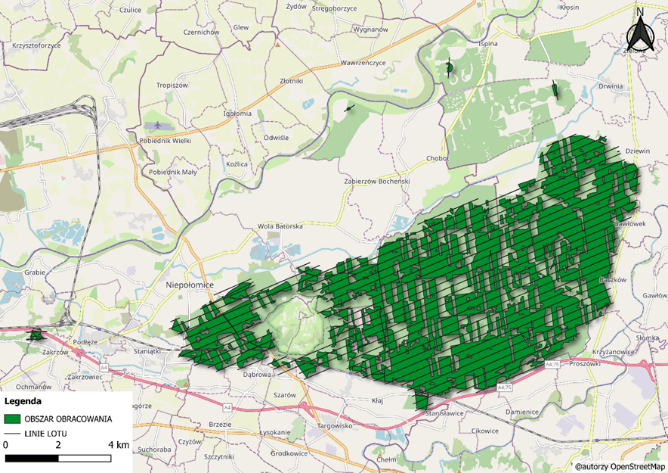
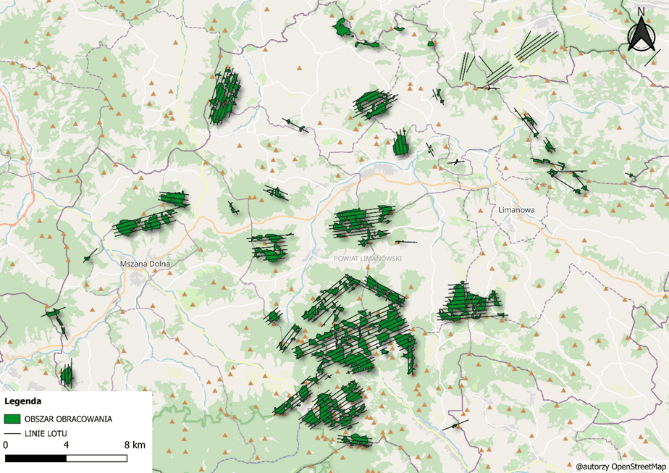
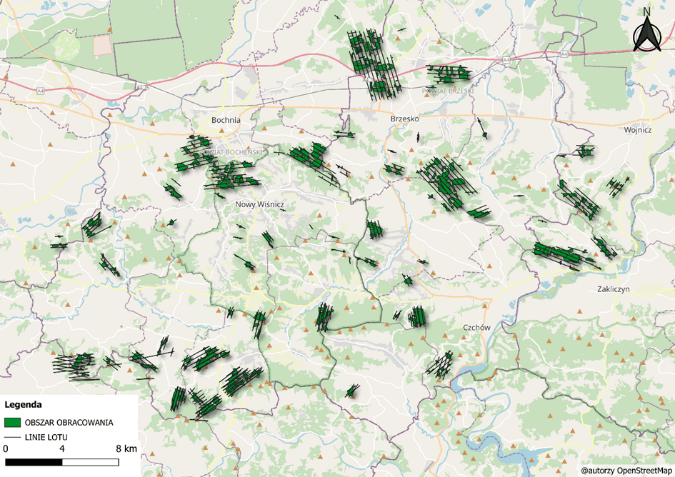
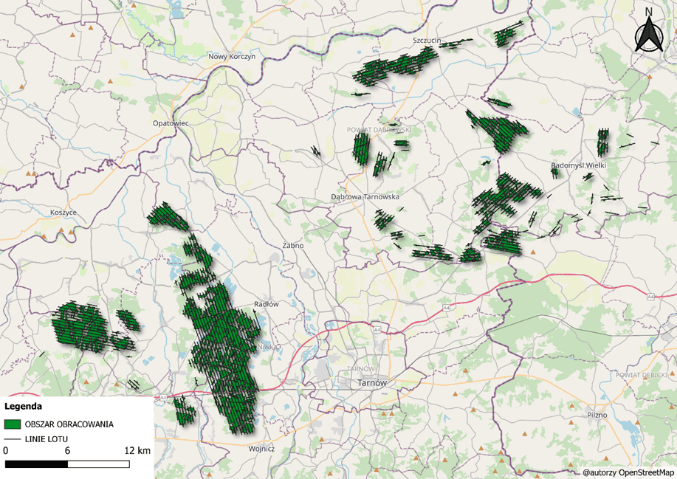
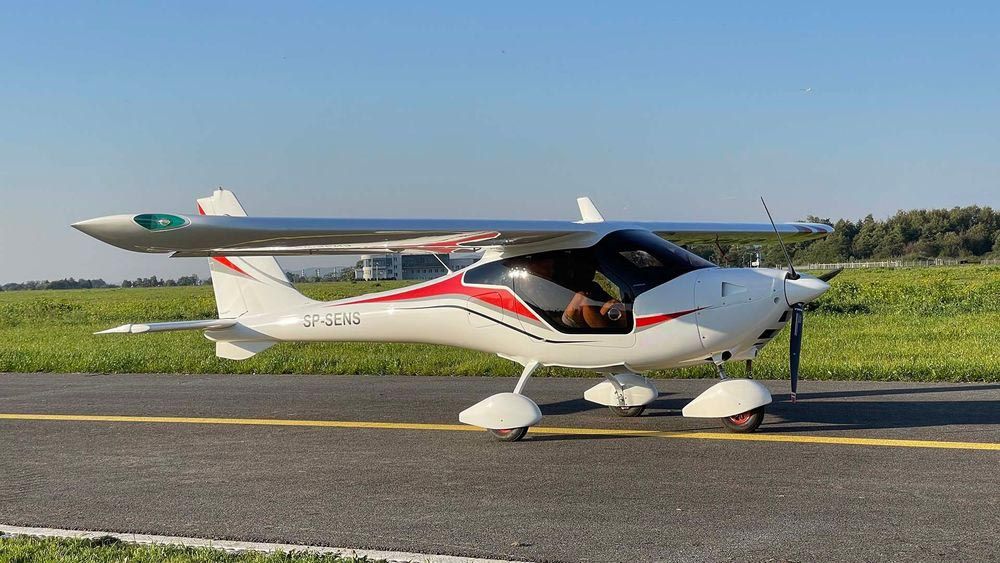
Imaging was carried out using the ALTER-EYE photogrammetric aircraft, currently produced by AlterGeo Holding. The aerial photography campaign lasted only five days (28 flight hours), a result unattainable using other imaging methods such as drones. The area was imaged in visible light (RGB) and near-infrared (NIR) at very high resolution (2 cm GSD), which is difficult to achieve from standard flight altitudes.
Processing the measurement data into photogrammetric products and performing the analyses took several months. The volume of collected data was enormous, and developing and testing the automated analysis methodology was extremely demanding.
Data modeling and damage estimation were carried out using a proprietary methodology developed by SmallGIS during the project, based on previous analyses and in-house research.
Across the total assimilation apparatus area in the studied compartments, mistletoe occupied from 0.08% in fir stands to 0.84% in pine stands. These results represent averages for all stands examined within each forest district.
Within the analyzed area of 20,725 hectares, the mistletoe assimilation apparatus covered a total of 39.77 hectares. This represents less than two per mille of the compartment area and less than 1% of the host trees’ assimilation apparatus area. These figures may appear insignificant—much like blood alcohol concentration or viral load in a host organism—yet such factors can be lethal. The actual impact of a pathogen may be nonlinear and completely disproportionate to its mass within the stand.
In the four analyzed forest districts, 421,479 trees were found to host mistletoe in detectable quantities, corresponding to approximately 1 million cubic meters of timber significantly burdened by the hemiparasite.
When spatial granularity is considered at the level of forest compartments, the picture becomes much more alarming. Some stands are completely dying off. Maximum infestation levels reach 100% of trees in certain compartments, while the minimum is 0%. Average infestation ranged from 1.4% in fir stands to 20.92% in pine stands.
The low average in fir stands is strongly influenced by elevation above sea level. Many high-elevation compartments are free of mistletoe, whereas stands at lower elevations are more heavily burdened. The average number of infested trees per hectare ranged from 1.09 in fir stands to 27.78 in pine stands.
At the individual tree level, the average crown infestation by mistletoe—measured as the proportion of visible mistletoe assimilation apparatus relative to the total visible assimilation apparatus of the tree crown—ranged from 4.08% to 9.03%. No significant difference was observed between pine and fir.
Trees infested by mistletoe showed average defoliation (measured at the forest district level) ranging from 24.25% to 42.91%, with the full range extending from 0% to 100%.
The presented results are subject to error. This is not the place to document the validation process in detail or to discuss the causes of errors and methods of eliminating them. It is sufficient to note that the developed method underestimates actual mistletoe occurrence by approximately 18%, meaning that the true number of infested trees is significantly higher.
Producer accuracy for the applied method was 94%, while user accuracy was 76%. Validation showed that the automated detection method identifies about 6% of locations that are not actually mistletoe (false positives), while as many as 24% of infested trees are missed by the algorithm (false negatives).
Improving detection effectiveness is possible but would require a different definition of the data processing workflow. During this project, such optimization was no longer feasible due to the extremely tight five-month project timeline.
At the scale of overall stand production capacity, the amount of mistletoe does not appear to be of dominant economic importance. However, the reported infestation levels are by no means negligible.
In heavily infested stands, their fate appears sealed. Unless a sudden climate cooling occurs, these stands will die. Their transformation will take place either naturally and chaotically, or in a rational, economically justified manner designed by humans.
The essence of the conducted research is therefore the identification of stands in which mass mistletoe occurrence leads to an inevitable process of disintegration. Such studies require both quantitative and qualitative measurements. Identifying the location and number of infested trees, infestation concentration, and degree of damage necessitates research of the type presented above. These data form the basis for planning management actions in deteriorating stands.
The studies also allow documentation of the actual condition of stands prior to interventions, which is an important element in justifying management decisions to supervisory authorities and the public.
The conducted research shows that the cost of obtaining information amounted to approximately PLN 2.4 per detected tree, and about PLN 50 per hectare of analyzed area. It should be noted, however, that data acquisition covered an area about 2.5 times larger than the analyzed stands, which increases the per-hectare cost.
Approximately two-thirds of the total cost was related to data analysis, and only one-third to data acquisition. Data collected over five days (about 28 flight hours) occupied approximately 50 TB of storage. Total processing time exceeded 125 days (over 3,000 hours) when calculated per high-performance workstation.
The quoted amounts represent the total costs incurred by the contractor, of which only about one-quarter was covered by forest districts using funding from the Forest Fund.
Is a cost of PLN 2.4 per tree detected from the air high? It can be compared with ground-based inventory costs, which would require at least 20 people working in the field for about five months on a project of comparable scale, resulting in costs of approximately PLN 2 million.
Obtaining the same information through ground inventory would therefore be about twice as expensive as aerial inventory. Importantly, aerial documentation is indisputable compared to ground records and provides unequivocal evidence of environmental conditions on the inventory date.
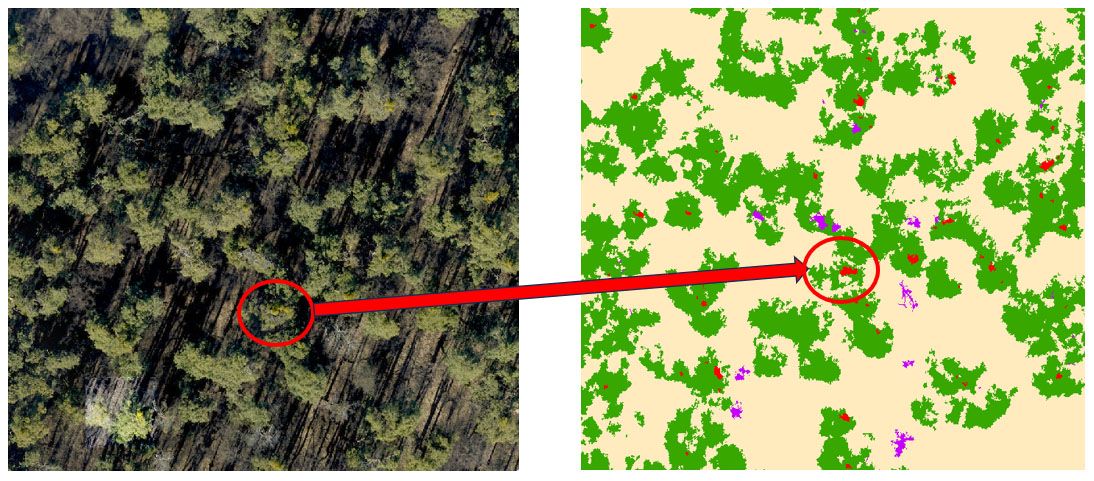
The presented research confirms that despite the seemingly small percentage share of mistletoe biomass at the scale of entire stands, the problem is significant in specific forest compartments where infestation reaches 100% of trees. These data provide objective, quantitative evidence necessary to justify management decisions.
The use of aerial remote sensing offers a cost-effective tool for identifying and documenting these critical areas. The information obtained forms the basis for:
Despite identified limitations in accuracy, this method allows foresters to focus actions on the most threatened areas, thereby optimizing the use of resources and financial means allocated to forest protection.
Source: article by Antoni Łabaj, SmallGIS Ltd., published in Las Polski no. 4/2026
